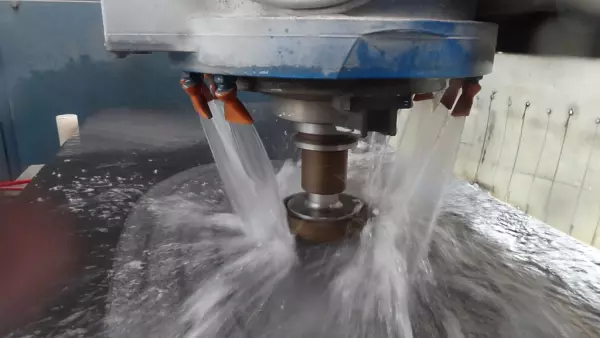

Production for countertops and interior fittings
Today, in addition to natural stone, we also process glass ceramics ( Dekton ), ceramics and quartz...
Portal and digital medical technology fair of the largest MedTech cluster in Germany
Production for countertops and interior fittings
Today, in addition to natural stone, we also process glass ceramics ( Dekton ), ceramics and quartz...

 Products and services from the categories Ceramic materials in medical technology or other healthcare-related industries .
There are a variety of ceramic materials that are used in engineering. Traditionally, alumina was the material of choice, but recent developments have made alumina tougher than ever. This material is used in hybrid capacitors, including alumina-toughened and zirconia-toughened devices. Ultimately, the material's durability depends on its specific application. However, alumina is the most common ceramic material for use in engineering.
These materials are characterized by a wide variety of properties. They are non-toxic and are resistant to heat and chemical reaction. They are also highly biocompatible, making them a preferred choice for many medical applications. In addition to implants, ceramics are also used in tissue engineering scaffolds, drug delivery devices, and piezoelectric components. Increasing customization has resulted in a greater range of ceramic-based cochlear implant components.
The availability of cheap ceramic raw materials makes ceramic manufacturing affordable. The materials are relatively inexpensive to manufacture and can be machined to meet any shape or dimension. Moreover, ceramics are inexpensive to use and can be a cost-effective alternative for many medical devices. The major barrier to implementing ceramics in medical devices is the process of setting up the manufacturing process. While many manufacturers of medical devices have experience in using ceramic materials, some may be skeptical about the technological benefits of using ceramics in their products.
One industry that is generating significant demand for ceramics is the medical device industry. In 2012, the industry employed around 356,000 people and was worth $60-70 million dollars. In 2013, Washington lawmakers enacted a 2.3% excise tax on some types of medical devices, with exceptions for eyeglasses, contact lenses, and hearing aids. While Congress has to decide whether to continue this tax, it would be effective on January 1, 2018.
Another common use for ceramics is in medical devices. In fact, it is increasingly used in many industries, including dental implants. The material's chemical durability is one of the key benefits of ceramics. It does not react with water or organic solvents, which make it ideal for the construction of a variety of medical devices. The material is also resistant to heat and cold, and can take many different forms. This makes it an ideal choice for many medical applications.
Ceramic materials have an array of uses in medicine. They can be used in a variety of devices, including medical implants. Besides its electrical and mechanical properties, ceramics can be used in medical devices. Surgical applications include implantation of sensors and brachytherapy seeds. In addition to being hard, ceramic materials are more durable than metals and polymers, and are less expensive than most other materials. They can also be highly patterned with electrical circuitry and can be molded to an extraordinary degree of detail.
Advanced ceramics are specialized for specific applications. Silicon nitrides are used in cutting tools, while tungsten carbides are used for aerospace. While the most common ceramics are amorphous, they are often made of inorganic compounds. Graphite is an example of an inorganic material, while diamond is a crystalline material. These two materials are classified as both oxidative and non-oxide, which is why they can be classified as both chemical and physical properties.
Become a digital exhibitor yourself in the online portal of the largest and best-known MedTech cluster region in Germany and inform the world of medical technology about your products and services as well as about news, events and career opportunities.
With an attractive online profile, we will help you to present yourself professionally on our portal as well as on Google and on social media.