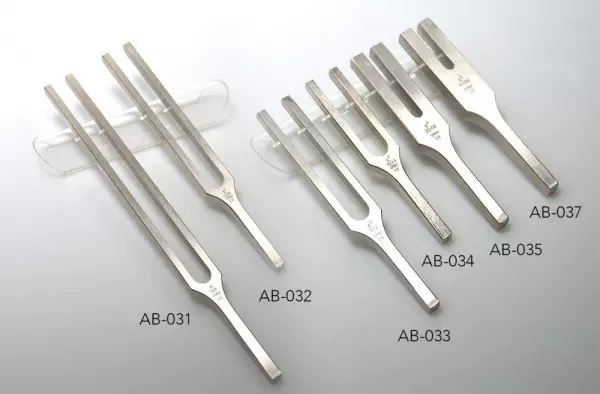

Tuning forks for ear specialists with mutes More information about tuning forks for ear speci...
Portal and digital medical technology fair of the largest MedTech cluster in Germany
Tuning forks for ear specialists with mutes More information about tuning forks for ear speci...
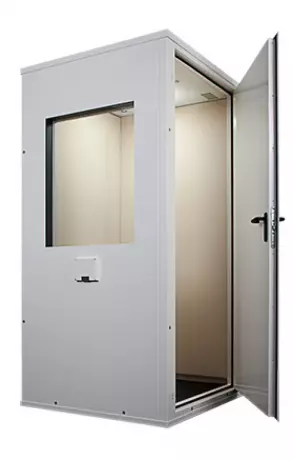

Listening cabins for audiometry
A reliable and reproducible hearing examination can only be carried out in rooms that are specially...


Finishing processes for hearing aids and...
Earmoulds and in-ear headphones Earmoulds are manufactured using additive or cutting processes wh...
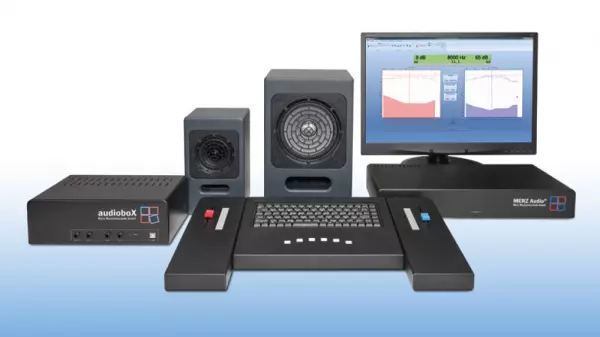
Diagnostic Audiometer MERZ Audio®
The PC audiometer MERZ Audio® developed by us is a real two-channel audiometer with air conducti...
 Products and services from the categories Audiometry, audiology, ear diagnosis (hearing test / hearing ability) in medical technology or other healthcare-related industries .
The objective method of audiometry is a very different form of testing than clinical hearing tests. This type of assessment doesn't depend on the patient's response. The patient must be cooperative with the electrodes and probes, so that they can produce a reproducible response. The results of an audiogram are not used to diagnose a condition or treat a disease. The findings of an audiogram are usually a sign of a hearing impairment, and the result of the test is often a diagnosis of that condition.
The purpose of audiometry is to test a person's ability to hear sound. This means that it assesses the person's ability to perceive the loudest, clearest sound. The results of an audiogram are based on the patient's ability to perceive the speed and pitch of sound waves. The test is useful for diagnosing hearing loss, and determining if a patient needs treatment. It also helps in determining the cause of the hearing loss.
A diagnostic audiometry is a painless procedure in which sounds are played and listened to. The test measures the patient's ability to hear different sounds, pitches and frequencies. The sounds used in audiometry are different depending on their loudness and frequency. They are played in front of the ear, where the hearing cells are located. These cells respond to the vibrations of the sound waves and send signals to the brain. Patients with tumors in or around the ear may undergo audiometry testing to monitor their hearing before surgery or to evaluate the effectiveness of hearing aids.
An audiometric test involves testing a person's hearing and interpreting the results. One of the most common assessments is the threshold of audibility. The threshold of audibility measures the sound level a person can hear just below the audibility threshold. It is useful as a tool to monitor exposure to noise. A hearing loss can be unilateral or bilateral and is not always symmetric. Several factors can lead to hearing loss, including age and noise exposure.
A hearing test focuses on two basic aspects: frequency and intensity. In a pure tone audiometry test, a person wears earphones and listens to the sound. The test can be performed with headphones, earphones, or a combination of them. Its result will show the amount of volume a person can tolerate. An audiogram also shows a patient's hearing capacity in terms of acoustic reflexes.
A threshold search audiometric test is a test that determines the softest sound a patient can hear 50% of the time. This type of test is more complex than audiometry, but requires more expertise and time than any other hearing test. In contrast, a pure-tone threshold search audiometry is a method where the patient is presented with a pure tone at a clearly audible level. Then, the tone is gradually decreased by 10 dB.
Become a digital exhibitor yourself in the online portal of the largest and best-known MedTech cluster region in Germany and inform the world of medical technology about your products and services as well as about news, events and career opportunities.
With an attractive online profile, we will help you to present yourself professionally on our portal as well as on Google and on social media.